
About
Independent Consultant
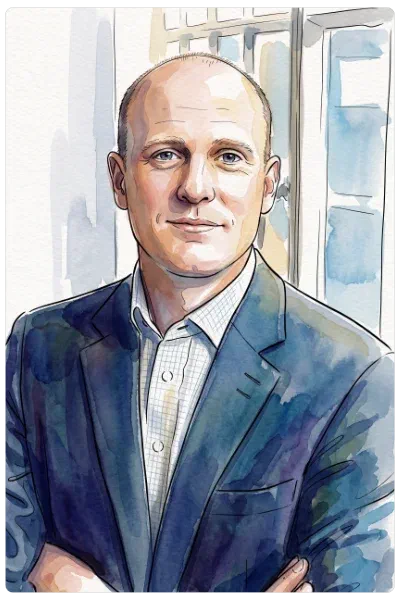
David Stobs-Stobart
I will help you understand where you are today and what your teams need to do next. I use my product management and technical experience to coach and guide you through the risks and opportunities of AI and automation.
Linkedin Profile (opens in a new tab)
Background
Over the last 20 years, I have been building software solutions as Chief Product Officer for a variety of industries and organisation sizes. I’ve worked with small and large brands in the UK and abroad to tackle problems in complex domains and in business-critical workflows. I’ve trained in process improvement and have worked hands-on with AI since 2010, across classifiers, recommenders, image recognition and now large language models (LLMs). That combination of people, project and technology experience is brought to every AI governance engagement to help you proceed confidently with practical advice.
Working With Me
I adjust my approach according to your objectives and your experience to date. For illustration, a typical engagement might use interviews and workshops to build a clear picture of your organisation’s current maturity and risk profile. Followed by a review of your highest value opportunities to automate, and a recommendation on how to proceed. Depending on your needs, I am able to coach your team to implement a solution and provide a blueprint for follow-on projects. Deliverables, built in conjunction with your stakeholders and process owners, may include:
- AI Maturity Assessment
- AI Register
- AI Policy
My Philosophy
It is really automation, not AI
Take the letters ‘AI’ out of most of the projects I am asked about, and what remains is all about data and process. The technology is new but the work underneath it usually is not. I find it more useful to think of AI as an enabler. A decade ago the answer to the same problem might have been a rules engine, a new module, or an offshore team; today it is a language model and AI agents. The persistent question is “what work is being done here, who depends on it, and what value is unlocked if you did it differently?”. This matters because a messy process, automated, is now faster and harder to inspect. Uncertain data produces confident output that nobody can check.
So my first question is almost always about where the work is blocked or slow and why. If automation is the right answer, then I can help you proceed deliberately and with the full context needed to get it right. I get that many businesses just want to be seen doing the right things on AI. That’s an expensive and wasteful path to take. Making good decisions to automate something using AI will save time and money, and will still be paying you back in three years whatever the tools look like by then.
Build for durability past the hype cycle
Running at ‘AI speed’ costs smaller organisations more than it gives them. This firehose of new, shiny techniques, ideas, models, tools, ways of working…they end up raising the barrier to entry in a field whose whole promise was to lower it. Do you run a business or team and feel behind because you have not read or done the latest thing? I look for the parts that keep their value, like data you trust and processes you can describe out loud. None of that is tied to a vendor, and none of it needs replacing when the next model arrives.
The test I apply is deliberately blunt: are you investing in a new model/ tool, or are you creating long term value? Don’t mistake a new feature or technique for a strategy.
Compliance for its own sake is useless to an SME
Big frameworks like ISO 42001 (opens in a new tab) are useful standards. But they also assume a manager with time to read them and a team to implement them. Most of the organisations I work with have neither. You’re busy and now you have AI turning everything upside down.
Passing you a framework and calling it governance is the consultants’ way. Instead, I use those standards as a source of good questions and not a checklist. What comes after working with me is small enough to survive contact with a busy Tuesday: a policy your team can read in one sitting, a register that takes minutes a week to keep current. I would far rather you had three controls that are genuinely followed than thirty that exist on paper, and I would rather we spent our time together on the conversations that make those three stick.
…and if you like tealeaves
I’m INTP on Myers-Briggs (opens in a new tab), a classic ‘completer-finisher’. I’m predominantly high on conscientiousness and steadiness on DISC (opens in a new tab). And lastly, if that wasn’t enough, I’m 1 (reformer) and 5 (investigator) on Enneagram (opens in a new tab).
Pronouns are he/him. Proudly married with 2 adult children. Outside of technology and AI, I’m always happy to talk about trees (love them), running barefoot (it’s spiritual) and video games (playing since 1984).